
Online Activism Through Social Media Engagement of Community Youth Leaders from a Teachers College
Article Sidebar
-
Social media engagement, filipino youth leaders, online activism, social constructionism theory
Abstract
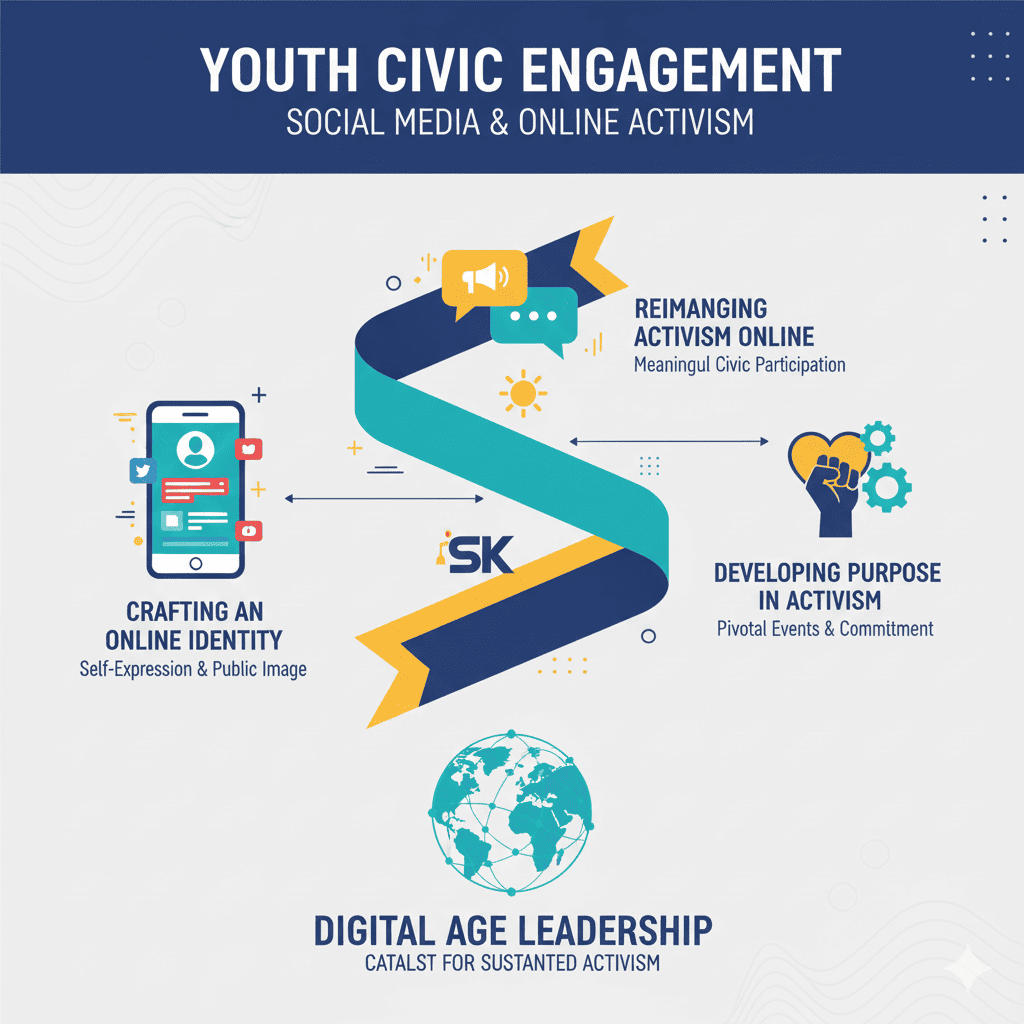
Social media has continuously emerged as a transformative platform for youth civic engagement, enabling young leaders to participate in public discourse, advocate for causes, and shape community narratives. The aim of this study is examine how Filipino community youth leaders, specifically Sangguniang Kabataan (SK) Chairpersons, approach their social media engagement in relation to online activism. Employing a qualitative narrative inquiry approach grounded in Social Constructionism, this research captures the lived experiences of student leaders from a teachers' college. A semi-structured interview guide distributed through Google Forms was used to collect data through written interviews, enabling participants to provide in-depth, reflective answers. Findings reveal three major themes: (1) Crafting an Online Identity, where digital spaces allow for both personal self-expression and public image building; (2) Reimagining Activism Online, wherein social media actions become meaningful forms of civic participation; and (3) Developing Purpose in Activism, highlighting how pivotal events, emotional connections, and leadership roles deepen commitment to advocacy. These themes highlight how social media engagements strongly influence the political activities of community youth leaders, thus encouraging them to engage in digital forms of activism. These findings demonstrate that youth engagement online can evolve into reflective and sustained activism, underlining the role of social media as both a platform and a catalyst for youth-driven civic leadership in the digital age.
Full text article
References
Abdullah, N. H., Zaki, T. S. A. T., & Ahmad, M. F. (2024). Shaping the Future: Social Media’s Role in Youth Political Information and Engagement - A Review of Literature. International Journal of Academic Research in Business and Social Sciences, 14(12), Pages 319-325. https://doi.org/10.6007/IJARBSS/v14-i12/23955
Allaste, A.-A., & Saari, K. (2020). Social Media and Participation in Different Socio-political Contexts: Cases of Estonia and Finland. YOUNG, 28(2), 138–156. https://doi.org/10.1177/1103308819828879
Alodat, A. M., Al-Qora’n, L. F., & Abu Hamoud, M. (2023). Social Media Platforms and Political Participation: A Study of Jordanian Youth Engagement. Social Sciences, 12(7), 402. https://doi.org/10.3390/socsci12070402
Associate Professor, NIMS University, Jaipur, Rajasthan, & Raj, Dr. S. M. A. (2024). Impact of Digital Marketing in Building Brand Awareness and Engagement. Interantional Journal Of Scientific Research In Engineering And Management, 08(05), 1–5. https://doi.org/10.55041/IJSREM35200
Braun, V., & Clarke, V. (2006). Using thematic analysis in psychology. Qualitative Research in Psychology, 3(2), 77–101. https://doi.org/10.1191/1478088706qp063oa
Butina, M. (2015). A Narrative Approach to Qualitative Inquiry. American Society for Clinical Laboratory Science, 28(3), 190–196. https://doi.org/10.29074/ascls.28.3.190
Chen, C. W., McCarron, G. P., & Owen, J. E. (2024). The Emotional Labour of College Student Activism: An Interview-Based Study. Journal of Human Rights Practice, 16(3), 964–980. https://doi.org/10.1093/jhuman/huae025
Choi, M., Romero, D. M., & Jurgens, D. (2024). Profile update: The effects of identity disclosure on network connections and language. EPJ Data Science, 13(1), 45. https://doi.org/10.1140/epjds/s13688-024-00483-0
Copeland, S., & De Moor, A. (2018). Community Digital Storytelling for Collective Intelligence: Towards a Storytelling Cycle of Trust. AI & SOCIETY, 33(1), 101–111. https://doi.org/10.1007/s00146-017-0744-1
Fujiwara, T., Müller, K., & Schwarz, C. (2020). The Effect of Social Media on Elections: Evidence from the United States. SSRN Electronic Journal. https://doi.org/10.2139/ssrn.3719998
Fullam, J. (2017). Becoming a youth activist in the internet age: A case study on social media activism and identity development. International Journal of Qualitative Studies in Education, 30(4), 406–422. https://doi.org/10.1080/09518398.2016.1250176
Ghafar, Z. (2024). The Positive and Negative Aspects of Social media platforms in many Fields, Academic and Non-academic, all over the World in the Digital Era: A Critical Review. Journal of Digital Learning and Distance Education, 2(8), 707–721. https://doi.org/10.56778/jdlde.v2i8.212
Gleibs, I. H. (2025). A social identity approach to crisis leadership. British Journal of Social Psychology, 64(2), e12805. https://doi.org/10.1111/bjso.12805
Grande Ratti, M. F., Murature, D., Sánchez Del Roscio, A., Frei, S., & Benitez, S. E. (2024). Ética en la investigación cualitativa. Revista Del Hospital Italiano de Buenos Aires, 44(1), e0000295. https://doi.org/10.51987/revhospitalbaires.v44i1.295
Gudić, D., Lončar, M., & Vučica, Z. Š. (2024). Self-Presentation on Social Media: Sociological Research of Young People in the City of Split (Croatia). Studies in Media and Communication, 12(4), 235. https://doi.org/10.11114/smc.v12i4.7272
Hong, Y., & Lin, T. T. C. (2017). The Impacts of Political Socialization on People’s Online and Offline Political Participation—Taking the Youth of Singapore as an Example. Advances in Journalism and Communication, 05(01), 50–70. https://doi.org/10.4236/ajc.2017.51003
Intyaswati, D., Maryani, E., Sugiana, D., & Venus, A. (2021). Social Media as an Information Source of Political Learning in Online Education. Sage Open, 11(2), 21582440211023181. https://doi.org/10.1177/21582440211023181
Irannejad Bisafar, F., Foucault Welles, B., D’Ignazio, C., & Parker, A. G. (2020). Supporting Youth Activists? Strategic Use of Social Media: A Qualitative Investigation of Design Opportunities. Proceedings of the ACM on Human-Computer Interaction, 4(CSCW2), 1–25. https://doi.org/10.1145/3415180
Jack, S. M., & Phoenix, M. (2022). Qualitative health research in the fields of developmental medicine and child neurology. Developmental Medicine & Child Neurology, 64(7), 830–839. https://doi.org/10.1111/dmcn.15182
Kaviani, D., & Salehi, N. (2022). Bridging Action Frames: Instagram Infographics in U.S. Ethnic Movements. Proceedings of the ACM on Human-Computer Interaction, 6(CSCW1), 1–43. https://doi.org/10.1145/3512926
Kirshner, B. (2007). Introduction: Youth Activism as a Context for Learning and Development. American Behavioral Scientist, 51(3), 367–379. https://doi.org/10.1177/0002764207306065
Korstjens, I., & Moser, A. (2018). Series: Practical guidance to qualitative research. Part 4: Trustworthiness and publishing. European Journal of General Practice, 24(1), 120–124. https://doi.org/10.1080/13814788.2017.1375092
Marshall, I. C., Hammer, L. A., Springfield, C. R., & Bonfils, K. A. (2024). Activism in the Digital Age: The Link Between Social Media Engagement with Black Lives Matter-Relevant Content and Mental Health. Psychological Reports, 127(5), 2220–2244. https://doi.org/10.1177/00332941221146706
Middaugh, E., Kornbluh, M., Lee, A., Kligler-Vilenchik, N., Ramasubramanian, S., Clark, L. S., & Vea, T. (2025). Youth Participatory Politics: Understanding and Supporting Civic Engagement in the Social Media Era. In D. A. Christakis & L. Hale (Eds.), Handbook of Children and Screens (pp. 253–259). Springer Nature Switzerland. https://doi.org/10.1007/978-3-031-69362-5_35
Papacharissi, Z. (Ed.). (2010). Social Network Sites as Networked Publics: Affordances, Dynamics, and Implications. In A Networked Self (0 ed., pp. 47–66). Routledge. https://doi.org/10.4324/9780203876527-8
Papacharissi, Z. (2015). We Have Always Been Social. Social Media + Society, 1(1), 2056305115581185. https://doi.org/10.1177/2056305115581185
Peart, M., Cubo-Delgado, S., & Gutiérrez-Esteban, P. (2022). Exploring the Role of Digital and Socio-civic Skills for Promoting Youth Participation and Digital Citizenship. European Journal of Educational Research, volume–11–2022(volume–11–issue–2–april–2022), 697–709. https://doi.org/10.12973/eu-jer.11.2.697
Pedroso, J. E., Notes, F. A., Ferrer, M. P., Jardeleza, L. C., Estuya, C. B., & Empil, B. D. (2024). Social Media as a Coping Tool Amongst Social Studies Pre-Service Teachers. Journal Of Digital Learning And Distance Education, 3(7), 1154–1167. https://doi.org/10.56778/jdlde.v3i7.367
Public Administration Kampala International University, Uganda., & Nchaga, A. M. (2025). Civic Engagement In The Digital Age: Challenges And Opportunities. NEWPORT INTERNATIONAL JOURNAL OF CURRENT ISSUES IN ARTS AND MANAGEMENT, 6(1), 58–65. https://doi.org/10.59298/NIJCIAM/2025/6.1.5865
Ross, K., & Bürger, T. (2014). Face to face(book): Social media, political campaigning and the unbearable lightness of being there. Political Science, 66(1), 46–62. https://doi.org/10.1177/0032318714534106
Rye, D. (2024). Activists and activism success: Towards a grounded conceptualisation. Interest Groups & Advocacy, 13(2), 123–145. https://doi.org/10.1057/s41309-024-00204-y
Sahoo, P., & Pradhan, J. S. (2025). Exploring the Role of Social Media in Promoting Collaborative Learning: A Systematic Review. Journal Of Digital Learning And Distance Education, 3(12), 1423–1435. https://doi.org/10.56778/jdlde.v3i12.502
Salman, A., & Saad, S. (2015). Online Political Participation: A Study of Youth Usage of New Media. Mediterranean Journal of Social Sciences. https://doi.org/10.5901/mjss.2015.v6n4s3p88
Segre, S. (2016). Social Constructionism as a Sociological Approach. Human Studies, 39(1), 93–99. https://doi.org/10.1007/s10746-016-9393-5
Sithole, A. (2025). Choosing a Qualitative Research Paradigm for Social Sciences: A Literature Review for Educational Researchers. International Journal of Research and Innovation in Social Science, VIII(XII), 3945–3954. https://doi.org/10.47772/IJRISS.2024.8120327
Steeves, V., & Regan, P. (2014). Young people online and the social value of privacy. Journal of Information, Communication and Ethics in Society, 12(4), 298–313. https://doi.org/10.1108/JICES-01-2014-0004
Velasco, J. C., C. Manguera, J. J., V. Navalan, E. J., C. Limchiko, J. N., D. Bayot, T. A. M., & V. Mercado, M. G. (2024). The Digital Dynamics of Political Engagement Among Filipino Youth: Examining Participation in Social Media Platforms. Pertanika Journal of Social Sciences and Humanities, 32(3), 1051–1071. https://doi.org/10.47836/pjssh.32.3.12
Zainurin, S. J. (2024). The Role of SocialMedia in Influencing Youth Political Behavior: A Systematic Literature Review. Pakistan Journal of Life and Social Sciences (PJLSS), 22(2). https://doi.org/10.57239/PJLSS-2024-22.2.001763
Zozaya-Durazo, L., Feijoo, B., & Sádaba-Chalezquer, C. (2023). Social Media Influencers Defined by Adolescents. KOME, 11(2). https://doi.org/10.17646/KOME.of.4
Authors
Copyright (c) 2025 JOURNAL OF DIGITAL LEARNING AND DISTANCE EDUCATION

This work is licensed under a Creative Commons Attribution 4.0 International License.
<a rel="license" href="http://creativecommons.org/licenses/by/4.0/"><img alt="Creative Commons License" style="border-width:0" src="https://i.creativecommons.org/l/by/4.0/88x31.png" /></a><br />This work is licensed under a <a rel="license" href="http://creativecommons.org/licenses/by/4.0/">Creative Commons Attribution 4.0 International License</a>.