
Exploring the Views of Secondary School Teachers in Greece on Interactive Educational Tools
Article Sidebar
-
teacher's perspectives, secondary education, interactive tools, technology, classroom challenges.
Abstract
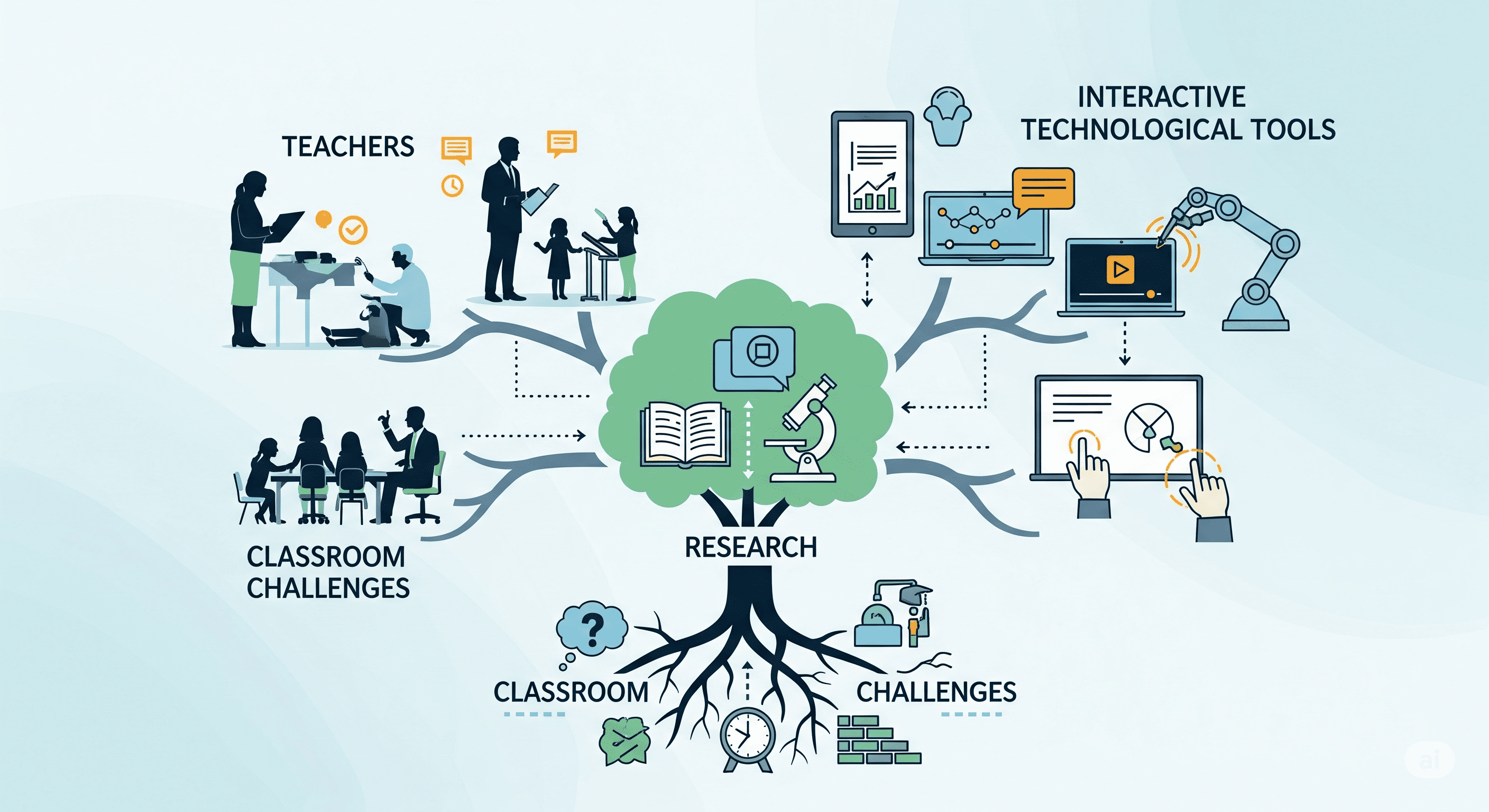
Teachers' opinions on the use of interactive tools are divided. The purpose of this research is to find out what teachers think about the use of interactive technological tools in the learning process. Despite the potential benefits, there is still a long way to go in understanding the problems teachers face in the classroom. The research that was conducted aims to understand the obstacles, the challenges, and the general assessment of the attitude of educators. By analyzing these tools that will be built in the future, they will be even more efficient, contributing decisively to the change in the learning process. In addition, an e-solution will be proposed by creating interactive material on political poetry. Both the analysis and the research through questionnaires and interviews will pave the way for future research, extensive in sample and scope, and experimental application of interactive material in schools to improve the educational process and achieve the best possible learning outcomes.
Full text article
References
Achuthan, A., Lam Pui Kiew, C., & Shahriar Himel, G. M. (2025). Animal species explorer Scanimals: An AI integrated mobile application for young learners. In M. Sanmugam, B. I. Edwards, N. M. M. Barkhaya, & Z. Khlaif (Eds.), Enhancing learning experiences with digital tools: AI, ChatGPT, and virtual and augmented reality. IGI Global Publishing, 75-110.
Aguilera, M. D., & Mendiz, A. (2003). Video games and education: Education in the face of a "digital" game. Computers in Entertainment, 1(1), 1-19.
Al-Momani, H. (2020). Integrating technology for student engagement in Jordanian classrooms: Challenges and opportunities. Journal of Educational Technology & Society, 23(1), 112-125.
An, H., & Fuentes, D. A. (2022). Digital learning in high-needs schools. Routledge.
Anderson, T. (2009). The impact of ICT on education: A critical reflection. International Journal of Education and Development using Information and Communication Technology, 5(3), 1-8.
Bingimlas, K. A. (2009). Barriers to the successful integration of ICT in teaching and learning environments: A literature review. European Journal of Teacher Education, 32(2), 235-252.
Bossaert, G., de Boer, A. A., Frostad, P., Jan Pijl, S., and Petry, K. (2015). Social participation of students with special educational needs in different educational systems. Irish Education Studies, 34, pp. 43–54.
Braun, V., & Clarke, V. (2006). Using thematic analysis in psychology. Qualitative Research in Psychology, 3(2), 77-101.
Burgin, X. D., Daniel, M. C., & Wasonga, T. A. (2022). Teachers’ Perspectives on Teaching and Learning during the Pandemic in the United States. Journal of Research in Innovative Teaching & Learning, 15(2), 135- 150.
Chen, H., & Huang, Y. (2024). The impact of digital learning platforms on student motivation in high school. Journal of Education Humanities and Social Sciences, 39, 391–395.
Cohen, L., Manion, L., & Morrison, K. (20086). Research methods in education. Routledge.
Conlon, T. J., & Simpson, A. (2003). Barriers to technology integration in education: A review of the literature. Computers & Education, 40(1), 39-57.
Crescenzi-Lanna, L. (2022). Literature review of the reciprocal value of artificial and human intelligence in early childhood education. Journal of Educational Technology & Society 55(3), 1-13.
Creswell, J. W. (20144). Research design: Qualitative, quantitative, and mixed methods approaches. SAGE Publications.
Darling-Hammond, L. (2000). Teacher quality and student achievement: A review of state policy evidence. Educational Policy Analysis Archives, 8(1), 1- 40.
Debby R. E. Cotton, Peter A. Cotton & J. Reuben Shipway (2023). Chatting and cheating: Ensuring academic integrity in the era of ChatGPT. Innovations in Education and Teaching International, VOL. 61, NO. 2, 228–239.
Deboys, J., Denning, T., & Young, M. (2016). Enhancing mood and communication in artistic education for children with disabilities. International Journal of Art & Design Education, 35(3), 342-353.
DeCoito, I., & Estaiteyeh, M. (2022). Online teaching during the COVID - 19 pandemic: exploring science/STEM teachers’ curriculum and assessment practices in Canada. Disciplinary and Interdisciplinary Science Education Research, 4(8), pp. 2-18.
Donovan, L. A., Hartley, K., & Wendel, M. (2010). Developing teacher skills for ICT integration. Tech Trends, 54(6), 38-44.
Ferri, F., Grifoni, P., & Guzzo, T. (2020). Online learning and emergency remote teaching: Opportunities and challenges in emergency situations. Societies, 10(4), 86, pp.1-18.
Fitch, E. F. (2002). Disability and inclusion: from labeling deviance to social valuing. Educational Theory 52, pp. 463–477.
Foutsitzi, S., & Caridakis, G. (2021). Aspects affecting the use of digital technologies in Greek schools. International Education Studies, 14(5), 145– 156.
Funk, J. B., Bechtel, R. J., & Holden, J. L. (2003). Violence in video games and interactive media. Journal of Applied Developmental Psychology, 24(5), 423-440.
Garcia-Castro, R. A., Mayta Cachicatari, N. A., Bartesaghi Aste, W. M., & Llapa Medina, M. P. (2024). Exploration of ChatGPT in basic education: Advantages, disadvantages, and its impact on school tasks. Contemporary Educational Technology, 16(3), ep511, 1-12.
García-Martín, J., & Cantón-Mayo, I. (2019). Digital tools in Spanish secondary education: Familiarity and usage patterns among teachers. Journal of Educational Technology Systems, 48(3), 327-344.
Gee, J. P. (2003). What video games have to teach us about learning and literacy. Computers in Entertainment, 1(1), 20-20.
Gentile, D. A., & Anderson, C. A. (2004). Violent video games: The new media violence research. Annual Review of Psychology, 55(1), 225-253.
Ginting, D.A. & Ramadhan, S. (2024). The impact of interactive learning applications on EFL students' preferences and academic achievement. TEM Journal, 13(2), pp. 1362–1370.
Gray, C., Hagger-Vaughan, L., Pilkington, R., & Tomkins, S.-A. (2005). The pros and cons of interactive whiteboards in relation to the key stage 3 strategy and framework. Language Learning Journal, 32(1), 38-44.
Guppy, N., Verpoorten, D., Boud, D., Lin, L., Tai, J., & Bartolic, S. (2022). The post-COVID-19 future of digital learning in higher education: Views from educators, students, and other professionals in six countries. British Journal of Educational Technology, 53(5), 1142-1156.
Ha, Y. & Im, H. (2020). The role of an interactive visual learning tool and its personalizability in online learning: Flow experience. Online Learning, 24(1), 205-226
Hew, K. F., & Brush, T. (2007). Integrating technology into K-12 teaching and learning: Current knowledge gaps and recommendations for future research. Educational Technology Research and Development, 55(3), 223- 252.
Hennessy, S., Harrison, D., & Wamakote, L. (2005). Teacher factors influencing classroom use of ICT in Sub-Saharan Africa. International Journal of Education and Development using Information and Communication Technology, 1(3), 22-35.
Kamal, T. & Illiyan, A. (2021). School teachers’ perception and challenges towards online teaching during COVID-19 pandemic in India: An econometric analysis. Asian Association of Open Universities Journal, 16(2), 223–239.
Keegan, D. (19963). Foundations of distance education. London & New York: Routledge.
Khan, A. A., MacDonald, A., & Wadhwa, S. (2012). Digital media in special education: Enhancing personalized learning. International Journal of Inclusive Education, 16(7), 705-716.
Lapada, A. A., Miguel, F. F., Robledo, D. A., & Alam, Z. F. (2020). Teachers’ COVID-19 awareness, distance learning education experiences, and perceptions towards institutional readiness and challenges. International Journal of Learning, Teaching and Educational Research, 19(6), 127–144.
Liu, Xianquan & Moeller, Aleidine J. (2019) Promoting Learner Engagement through Interactive Digital Tools. Faculty Publications: Department of Teaching, Learning and Teacher Education, 310, 34-51.
Lohr, A., Sailer, M., Stadler, M., & Fischer, F. (2024). Digital learning in schools: Which skills do teachers need, and who should bring their own devices? Teaching and Teacher Education 152, 104788.
Malihi, M. (2019). Examining safety and usability of virtual reality for children with autism spectrum disorder (ASD) (Master’s thesis). University of Toronto.
Martin-Sómer, M., Casado, C., & Gómez-Pozuelo, G. (2024). Utilizing interactive applications as educational tools in higher education: Perspectives from teachers and students, and an analysis of academic outcomes. Education for Chemical Engineers, 46, pp. 1-9.
Mouaheb, H., Maaref, N., & Akil, M. (2012). Serious games for e-learning: A survey. International Journal of Computer Science Issues, 9(1), 138-146.
Niemi, H., & Kousa, P. (2020). A Case Study of Students’ and Teachers’ Perceptions in a Finnish High School during the COVID Pandemic. International Journal of Technology in Education and Science (IJTES), 4(4), 352-369.
Orff, C. (1974). Music education for children with disabilities: A powerful means of expression. Journal of Music Education Research, 22(1), 10-15.
Peralta, H., & Costa, M. (2007). ICT knowledge acquisition among primary school teachers in Europe: A cross-country study. Journal of Computer Assisted Learning, 23(2), 118-129.
Pesebre, R.D.P., Quicho, R.F., Collantes, L.M., Lamson, C.N. & Pentang, J.T. (2024). Effectiveness of multimedia tools in enhancing consonant-vowel-consonant reading performance and phonics interest and enthusiasm among kindergarten ESL students. International Journal of Educational Management and Development Studies, 5(4), 201-225.
Polit, F. D., & Hungler, P. B. (1999). Nursing research: Principles and methods. Philadelphia: Lippincott.
Prensky, M. (2001). Digital natives, digital immigrants part 1. On the Horizon, 9(5), 1-6.
Purcell, K., Buchanan, J., & Friedrich, L.D. (2013). The impact of digital tools on student writing and how writing is taught in schools. (Retrieved from https://www.semanticscholar.org/paper/The-impact-of-digital-tools-on-student-writing-and-Purcell-Buchanan/176b714ee00abe32a06d9d931fdadfade201f4a3.)
Rangel-de Lázaro, G. & Duart, J.M. (2023). You Can Handle. You Can Teach It: Systematic Review on the Use of Extended Reality and Artificial Intelligence Technologies for Online Higher Education. Sustainability 2023, 15, 3507.
Riyat, M., Kakkar, R., & Kakkar, A. (2025). Creating immersive learning experiences in the education domain through virtual and augmented reality. In M. Sanmugam, B. I. Edwards, N. M. M. Barkhaya, & Z. Khlaif (Eds.), Enhancing learning experiences with digital tools: AI, ChatGPT, and virtual and augmented reality. IGI Global Publishing, 123-156.
Sarantakos, S. (19982). Social research. Basingstoke: Macmillan Press Ltd.
Scully, D., Lehane, P., & Scully, C. (2021). ‘It is no longer scary’: Digital learning before and during the COVID-19 pandemic in Irish secondary schools. Technology, Pedagogy and Education, 30(1), 159-181.
Searls, DB, (2012). Ten Simple Rules for Online Learning. PLoS Comput Biol 8(9): e1002631. https://doi.org/10.1371/journal.pcbi.1002631.
Setzer, T. S., & Duckett, M. E. (1994). Video games and learning: A research review. Educational Technology, 34(4), 33-40.
Sharma, Anurag. (2024). Teaching Digital Privacy: Navigating the Intersection of Technology. Education, and Privacy, 2022, 154-162.
Shkembi, F., Habili Sauku, V., Ibrahimi, S., & Ibrahimi, E. (2024). The psychological impact of online education on student well-being and motivation. International Social Sciences and Education Journal, 2(2), 1-8.
Schwarz. C. V.. Jason M. & Ajay S. (2007). Technology, Pedagogy and Epistemology: Opportunities and Challenges of Using Computer Modeling and Simulation Tools in Elementary Science Methods. Journal of Science Teacher Education, 18, 243-269.
Sulzenbruck, S., Hegele, M., Rinkenauer, G., Heuer, H. (2011). The death of handwriting: secondary effects of frequent computer use on basic motor skills. Journal of Motor Behavior, 43(3), 247-251.
Sweller, J. (1998). Cognitive load during problem solving: Effects on learning. Cognitive Science, 12(2), 257-285.
Teng, Y. & Wang, X. (2021). The effect of two educational technology tools on student engagement in Chinese EFL courses. International Journal Educational Technology High Education 18, 27, 1-15.
Valizadeh, M. (2022). Cheating in online learning programs: Learners’ perceptions and solutions. Turkish Online Journal of Distance Education-TOJDE, 23(1), Article 12, 195-209.
Vavritsa, S. (2023). Distance learning and online education in higher education: New technologies and social perspectives during the COVID-19 period [Academic work/MA Thesis]. Anagnostou, A. (Supervisor). Open access.
Vu, P. (2015). Infrastructure challenges in integrating ICT in education: A global perspective. International Journal of Educational Management, 29(2), 176-191.
Wang, A. I., & Tahir, R. (2018). The effect of using Kahoot! for learning – A literature review. Computers & Education, 149, 103818.
Ye, B., Wan Yahaya, W. A., & Luo, X. F. (2024). The Impact of Gamified Learning with Kahoot! on Student Motivation and Engagement. In K. Chee & M. Sanmugam (Eds.), Integrating Cutting-Edge Technology into the Classroom. IGI Global Scientific Publishing, pp. 292-311.
Yuen, H. K., Yang, M. F., & Chang, H. H. (2011). Perceptions of the pedagogical benefits of Web 2.0 tools among teachers in Mississippi. Journal of Educational Technology Systems, 39(2), 191-205.
Zhai, X. (2022). ChatGPT User Experience: Implications for Education. Available at SSRN: https://ssrn.com/
Zhang, D., & Aikman, S. (2007). Barriers to technology integration in education: Perspectives of teachers. International Journal of Technology and Educational Marketing, 2(4), 45-56.
Zhang, Y., & Lin, C. - H. (2020). Student interaction and the role of the teacher in a state virtual high school: What predicts online learning satisfaction? Technology, Pedagogy and Education, 29(1), 57–71.
Zhao, B. X. (2023). Educational Inequality: The Role of Digital Learning Resources. Lecture Notes in Education Psychology and Public Media,7, 634-642. https://doi.org/10.1016/j.susoc.2022.05.004
Authors
Copyright (c) 2025 JOURNAL OF DIGITAL LEARNING AND DISTANCE EDUCATION

This work is licensed under a Creative Commons Attribution 4.0 International License.
<a rel="license" href="http://creativecommons.org/licenses/by/4.0/"><img alt="Creative Commons License" style="border-width:0" src="https://i.creativecommons.org/l/by/4.0/88x31.png" /></a><br />This work is licensed under a <a rel="license" href="http://creativecommons.org/licenses/by/4.0/">Creative Commons Attribution 4.0 International License</a>.