
CIPP, Stake Model, Goal Free Model, Formative-Sumative Model (Apllications in Education)
Article Sidebar
-
CIPP, Stake Model, Goal Free Model, Formative-Sumative Model, Education
Abstract
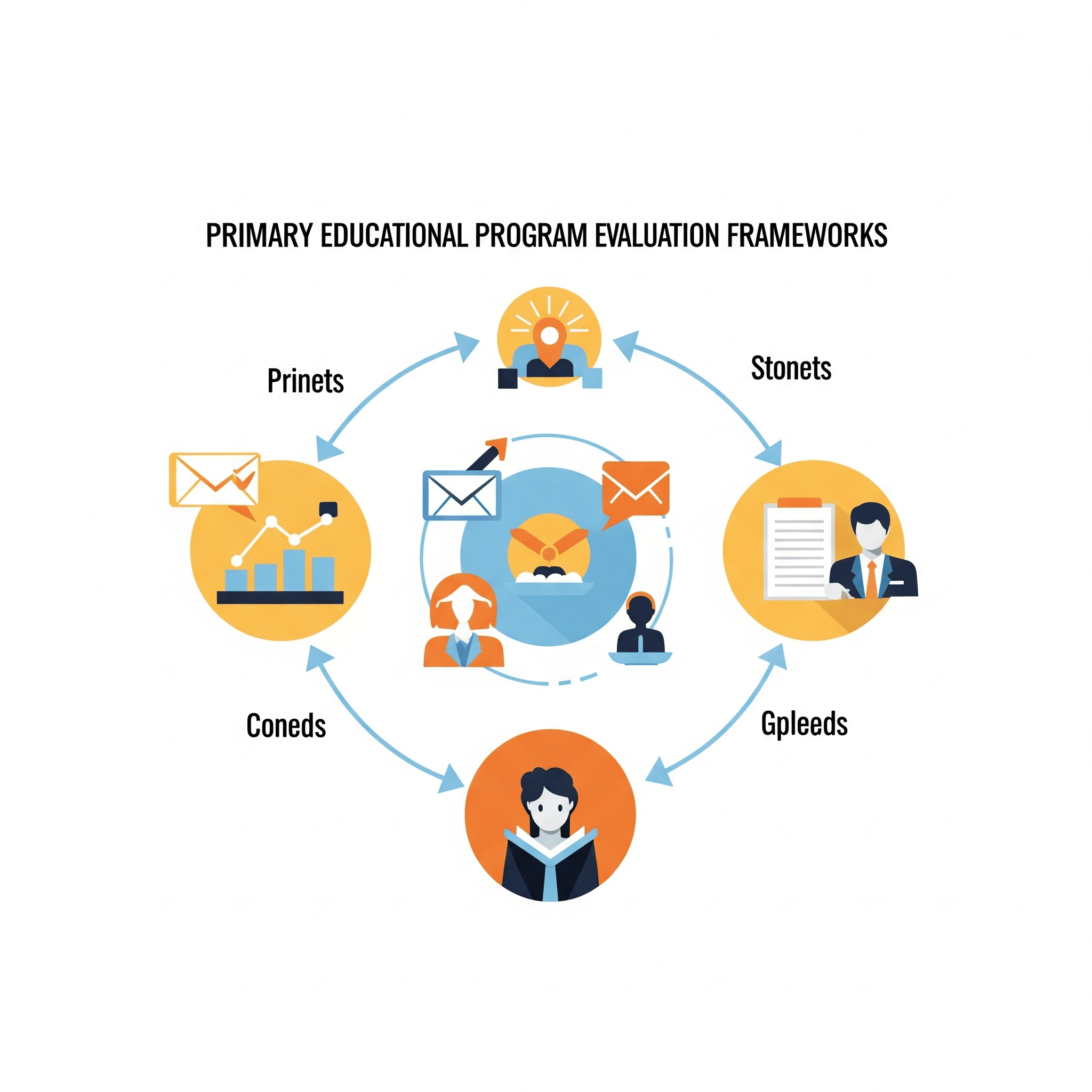
Program evaluation is a crucial component in efforts to improve educational quality. This article examines four primary evaluation frameworks CIPP (Context–Input–Process–Product), the Stake Model (Antecedents, Transactions, Outcomes), Goal Free Evaluation, and the Formative–Summative Model and illustrates their practical applications in the field. The CIPP model provides a comprehensive evaluation guide from needs analysis through outcome measurement, supporting ongoing decision‑making. The Stake Model emphasizes both descriptive and judgmental activities across initial conditions, instructional processes, and final outcomes, offering a complete picture of program effectiveness. Goal Free Evaluation adopts a fresh perspective by observing all real impacts including unanticipated effects without being bound by formal goal statements, thereby uncovering opportunities for innovative improvements. In contrast, the Formative–Summative Model divides evaluation into formative feedback during the process and summative assessment at the end, enabling timely interventions and comprehensive outcome measurement. By understanding the characteristics and advantages of each model, educators can select or combine the most appropriate frameworks to create adaptive, responsive, and sustainable learning.
Full text article
References
Arikunto, S. (2013). Dasar-dasar Evaluasi Pendidikan. PT. Bumi Aksara.
Arikunto, S., & Jabar, C. S. A. (2010). Evaluasi Program Pendidikan: Pedoman Teoretis Praktis Bagi Praktis Pendidikan. Bumi Aksara.
Aristya, S., Zurqoni, & Sugeng. (2023). CIPP: Implementation of the Educational Evaluation Model. Jurnal Evaluasi Dan Pembelajaran, 5(1). https://doi.org/10.52647/jep.v5i1.84
Goertel, R. A. (2023). Literature Review. In A. L. Nichols & J. Edlund (Eds.), The Cambridge Handbook of Research Methods and Statistics for the Social and Behavioral Sciences. Cambridge University Press.
Harahap, H., Zulqaidah, Tanjung, R. S., & Silalahi, K. A. (2024). Model Evaluasi Dalam Program Pendidikan. IMJEIJ: Indo-MathEdu Intellectuals Journal, 5(3).
Ibrahim, M. M. (2018). Penelitian Evaluasi Bidang Pendidikan (Pendekatan Kualitatif). Alauddin University Press.
Latip, A. E. (n.d.). Evaluasi Pembelajaran: Inovasi Penilaian Hasil Belajar. Puslitpen LP2M UIN Syarif Hidayatullah.
Mardiah, M., & Syarifudin, S. (2019). MODEL-MODEL EVALUASI PENDIDIKAN. MITRA ASH-SHIBYAN: Jurnal Pendidikan Dan Konseling, 2(1), 38–50. https://doi.org/10.46963/mash.v2i1.24
Nurcahyawati, E., Suryadin, A., Djollong, P. A. F., & Supadmi. (2022). Evaluasi Pembelajaran di Era DIgital 5.0 (1st ed.). Yayasan Wiyata Bestari Samasta.
Ratnawulan, E., & Rusdiana, H. A. (2014). Evaluasi Pembelajaran. Pustaka Setia.
Rohmad. (2017). Pengembangan Instrumen Evaluasi dan Penelitian (1st ed.). Kalimedia.
Snyder, H. (2019). Literature review as a research methodology: An overview and guidelines. Journal of Business Research, 104, 333–339. https://doi.org/10.1016/j.jbusres.2019.07.039
Tayibnapis, F. Y. (2000). Evaluasi Program. Rineka Cipta.
Wardani, H. K., Darusuprapti, F., & Hajaroh, M. (2022). Model-Model Evaluasi Pendidikan Dasar (Scriven Model, Tyler Model, dan Goal Free Evaluation). Jurnal Pendidikan: Riset Dan Konseptual, 6(1), 36. https://doi.org/10.28926/riset_konseptual.v6i1.446
Winkel, W. S. (1989). Psikologi Pengajaran. Gramedia.
Authors
Copyright (c) 2025 JOURNAL OF DIGITAL LEARNING AND DISTANCE EDUCATION

This work is licensed under a Creative Commons Attribution 4.0 International License.
<a rel="license" href="http://creativecommons.org/licenses/by/4.0/"><img alt="Creative Commons License" style="border-width:0" src="https://i.creativecommons.org/l/by/4.0/88x31.png" /></a><br />This work is licensed under a <a rel="license" href="http://creativecommons.org/licenses/by/4.0/">Creative Commons Attribution 4.0 International License</a>.